Calligraphy Paper: How to Choose Paper That Does Not Bleed
What makes paper work for nibs and brush pens: a smooth surface, sizing and enough weight. Includes paper types to look for, types to avoid, and a two-minute test for any sheet.
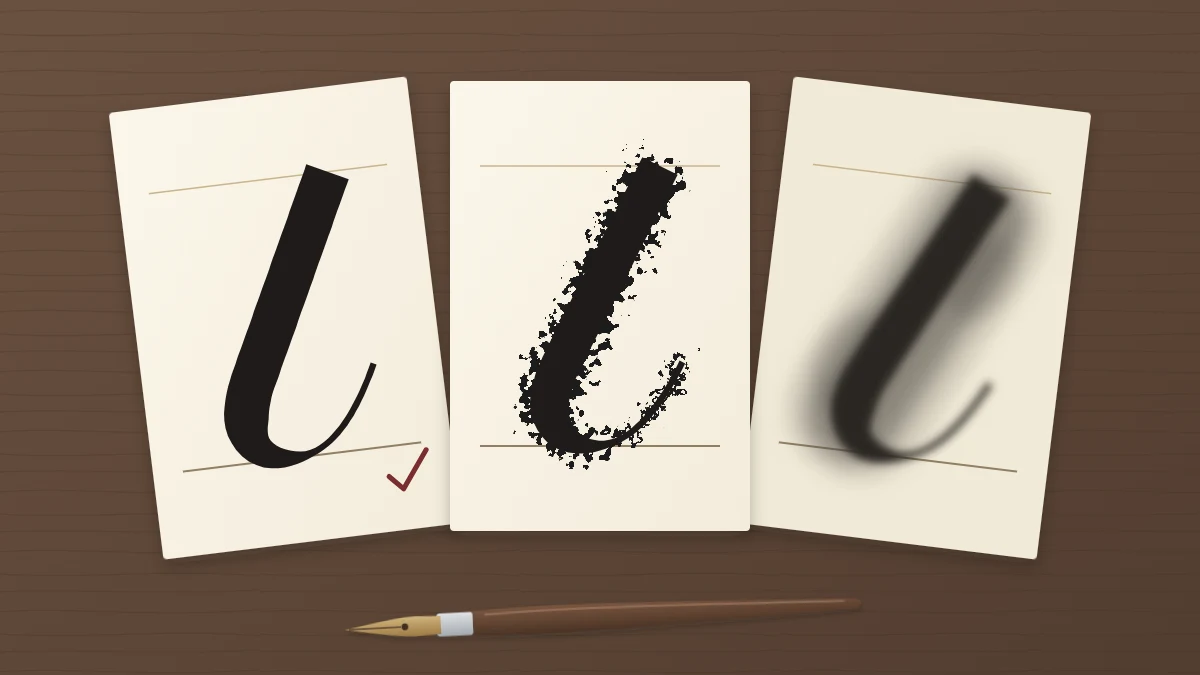
When a stroke turns fuzzy at the edges or shows up on the back of the sheet, the pen and ink usually get the blame. More often the cause is the page. Good calligraphy paper holds ink on its surface long enough to dry there, and ordinary notebook or copy paper frequently does not.
You do not need anything rare or specialized. You need to know three properties to look for, a few paper types that tend to have them, and a quick test that tells you whether a sheet will behave before you fill it with practice.
Feathering, bleeding and ghosting
These three words describe different problems, and telling them apart helps you fix the right thing.
- Feathering happens on the front. Ink creeps outward along the paper fibers, so a stroke that should have a clean edge looks hairy or blurred.
- Bleeding is ink soaking right through the sheet and marking the back, or even the page underneath.
- Ghosting, also called show-through, is when you can see the writing as a shadow from the other side although no ink has actually come through.
Feathering spoils hairlines and makes thick downstrokes look soft. Bleeding wastes the reverse of the sheet and can mark your desk. Ghosting is mostly a nuisance, and only matters if you want to write on both sides.
Three things that matter in a sheet
A smooth surface
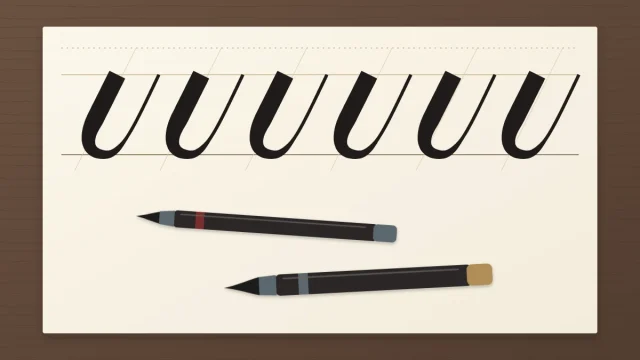
A pointed nib is two fine tines that slide across the page. On a textured sheet the tip catches on upstrokes, picks up fibers and spatters. A brush pen has a different problem with rough paper: the texture acts like fine sandpaper on a felt tip, and the point frays. Smooth paper lets both tools glide.
Sizing
Sizing is a treatment applied to paper during manufacture that makes it less absorbent. A well-sized sheet keeps wet ink sitting on top until it dries, which gives crisp edges. A lightly sized sheet drinks ink in like a paper towel. You cannot see sizing, and packaging rarely mentions it, which is why testing matters.
Enough weight
Heavier paper is thicker, so less shows through and wet strokes are less likely to buckle the sheet. Weight alone is not a promise of quality, though. A heavy, absorbent sheet still feathers, and some thin papers are sized so well that ink sits neatly on them.
Paper types to look for
Described by type, these are the kinds of paper that commonly work for nib and brush pen practice:
- Smooth marker or layout paper. Thin, very smooth and made to stop ink soaking through. It is often translucent enough to see guidelines placed underneath.
- Heavier smooth printer paper. Sheets made for crisp, high-quality printing are noticeably smoother and less absorbent than standard copy paper, and economical for filling page after page of drills.
- Smooth drawing pads. Look for words such as smooth, hot-pressed or plate finish. Avoid pads described as textured or toothy.
- Tracing or translucent paper. Very smooth, and ink dries slowly on it, so watch for smudges. Its main advantage is that you can lay it over a sheet of ruled lines and reuse those lines many times.
That last point saves real time. Rule one clear set of lines in pencil, slip it under a translucent sheet, and you have fresh guidelines for every page. The article on ruling your own guidelines explains how to set them out.
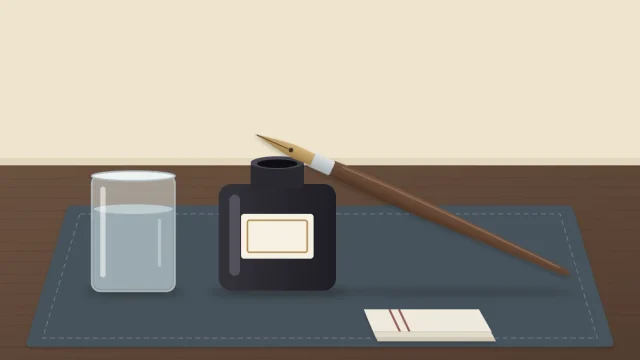
If you are still gathering supplies, the simple starter kit shows where paper fits alongside pens, pencil and ruler.
Paper to avoid for nib and brush pen work
- Rough or cold-pressed watercolor paper. The texture is lovely for washes and hard on nibs and felt tips.
- Fibrous handmade sheets. Loose fibers lift and lodge between the tines.
- Very absorbent paper. Newsprint, cheap notebook pages, paper towels and most standard copy paper let ink spread.
- Glossy coated paper. Photo-style and heavily coated sheets can leave ink sitting wet on top for a long time, where it smears or beads up.
None of these is bad paper. Each is made for a different job. You can come back to textured sheets later for finished pieces, once you know how your tools behave on them.
A simple paper test
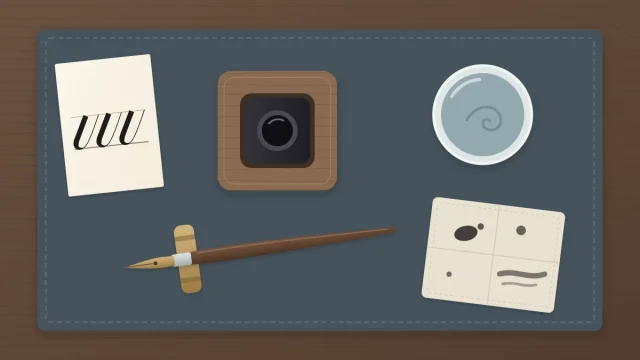
Before committing to a pad or a ream, try one sheet with the pen and ink you actually use. It takes a couple of minutes.
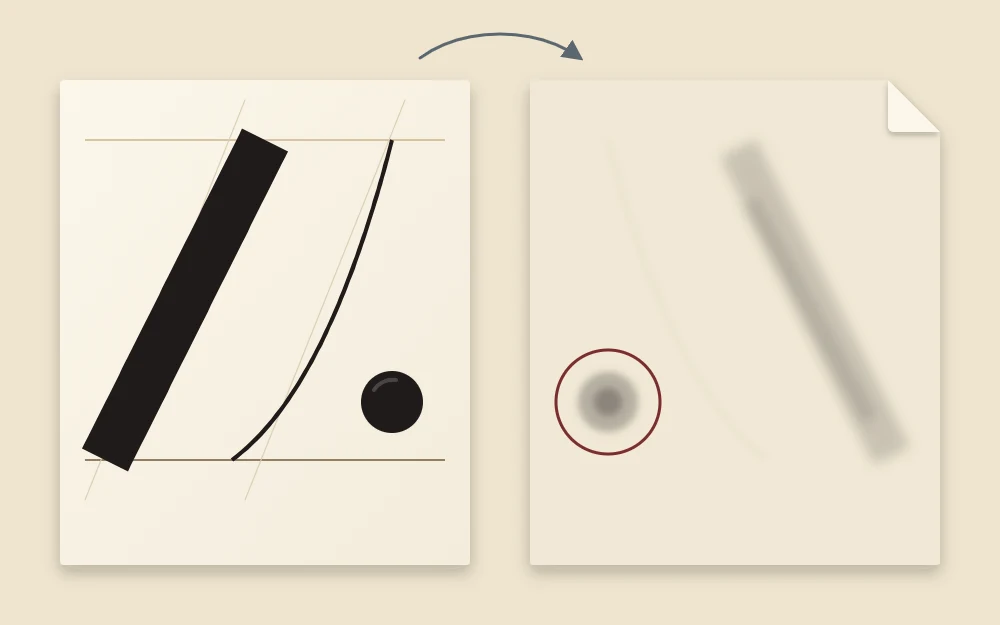
- Make one thick downstroke with firm pressure. This puts down the most ink your pen delivers in normal writing.
- Make one hairline upstroke with the lightest touch you can manage. Notice whether the tip glides or catches.
- Leave a small pool of ink: touch the loaded nib or the brush tip to the paper and hold it for a second or two so a round dot forms.
- Let everything dry fully, then look closely at the edges of all three marks.
- Turn the sheet over and look at the back.
Reading the result
- Crisp edges and a clean back: the paper suits that pen and ink.
- Fuzzy edges on the thick stroke: feathering. The sheet is too absorbent.
- Dark spots on the back, especially behind the dot: bleeding. Use a heavier or better-sized sheet, or write on one side only with a protective sheet beneath.
- A faint gray shadow on the back: ghosting. Fine for one-sided practice.
- A scratchy, catching hairline: the surface is too textured for a pointed nib.
When the paper is not the only cause
Paper and ink work as a pair. A very thin, watery ink can feather on a sheet that handles a thicker ink without trouble, and a heavily loaded nib will flood almost anything. If a paper you expected to work is misbehaving, test it with a second ink before giving up on it. The guide to handling and choosing ink describes how the main ink families differ.
Pressure plays a part too. Pressing hard on an upstroke digs the tip into the fibers even on smooth paper, so keep upstrokes light and let the downstrokes carry the weight.
A sensible way to stock up
Start with one inexpensive smooth paper for everyday drills and a small pad of something nicer for words you want to keep. Buy a small quantity first, test it, and only then buy more. Store sheets flat and dry, since damp paper becomes more absorbent, and keep a spare sheet under your writing hand so the page stays clean while you work.
Frequently asked questions
Can I use regular printer paper for calligraphy practice?
Standard copy paper is often too absorbent and slightly rough, so ink may feather and brush pen tips can wear faster. Heavier, smoother printer paper made for high-quality printing usually behaves much better. Test a single sheet with your own pen and ink before buying a full ream.
Why do my brush pens fray so quickly?
Fraying usually comes from surface texture. Even paper that feels fairly smooth to the fingers can be abrasive to a felt tip over hundreds of strokes. Switching to marker paper, layout paper or tracing paper, and easing off the pressure on upstrokes, generally helps the tip keep its point longer.
Does heavier paper always stop ink from bleeding?
Not always. Weight reduces show-through, but bleeding and feathering depend mostly on how absorbent the sheet is. A thick, soft paper can still soak up ink, while some thin, well-sized papers hold it on the surface. That is why a quick test tells you more than the weight printed on the pack.